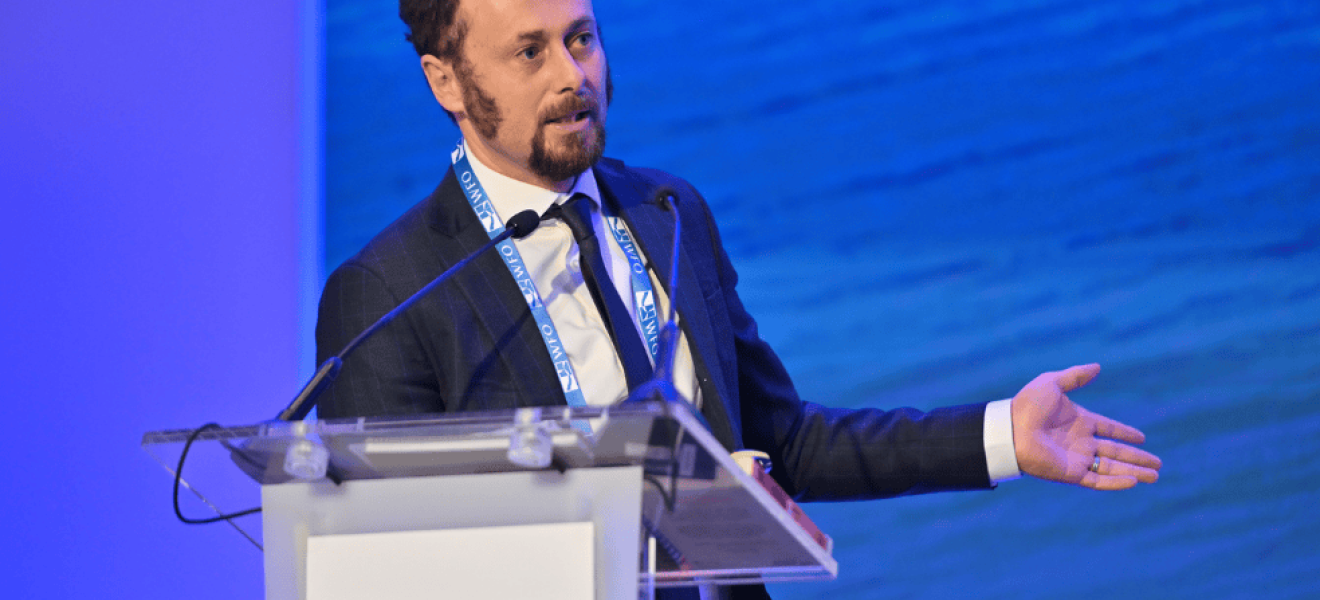
Falmouth tech start-up targets construction delays with £60k funding boost
A Falmouth software company is hoping to iron out the “butterfly effect” that can cause long delays in major construction projects, with the help of a £60,000 loan delivered by SWIG Finance from the British Business Bank’s South West Investment Fund.
Led by James Croftson, a mechanical engineer specialising in offshore wind farms, Interface Insight was set up to improve the way multi-billion-pound projects manage and communicate changes during their planning and delivery phases. Changes proposed by individual parties usually have unexpected consequences for other parties elsewhere in the chain, which ultimately cause delays and cost over-runs for the overall project. Interface Insight has developed a new piece of software that is changing the way people think about how project interfaces are identified, understood and managed.
The £200m South West Investment Fund covers the entire South West region and provides loans from £25k to £2m and equity investment up to £5m to help small and medium sized businesses across the region grow. SWIG Finance is the appointed fund manager for the smaller loans part of the fund.
James was motivated by his experience of many projects that all suffered the same problem: a lack of communication between organisations, resulting in major setbacks. “During a particularly painful process, I thought, there has to be a better way of doing this,” he recalls.
“You’re talking about 10 multi-national organisations across as many countries, crossing several time zones, all working on the same project and each managing their own multi-million-pound contract within it, but essentially all working in silos. We were relying on glorified spreadsheets and emails, which weren’t cutting it.
“It meant projects took longer and cost more than they should, because a small change in one area can cause a ripple effect on everything around it - but someone elsewhere might not realise some hidden implications until four months later, which means redoing a lot of work carried out in that time.
“For example, even a subtle change in measurements can cause major issues with manufacture and transport, so other parties need to know. But structural engineers don’t always realise just how much their changes might affect electrical engineers, and so on. There are news stories all the time about delays - HS2 and Hinkley Point are prime examples.”
James identified a process that would work but couldn’t find any existing software to enable it to be implemented. “There wasn’t a single ‘Eureka moment’ as such: it was more a mixture of accumulating frustrations from observing similar problems over and over again on many different projects, and a series of mini-Eureka moments spread out over a long time, each one adding to the ideas about how we could approach things differently to unlock better outcomes,” he said.
“Eventually, I came to the conclusion that if no one else was going to make it, I’d have to do it myself”.
Interface Insight’s software is based on graph theory, a branch of maths that considers connections or “interfaces” between objects. It offers a common language and platform into which users can input plans and it helps them to flag up where impacts might occur and who needs to know.
James likens it to using a map app on your phone. “Zoom out, you lose detail; zoom in, you lose the wider picture. An ideal compromise to help you get from A to B efficiently might involve showing enough important detail in the places where you do need it, while not showing the same level of detail in the other places where you don’t need it.
“In an analogous way, that’s what our system allows you to see: just switch the ‘map of geographic places’ for a ‘map of all the inter-relationships between different aspects of a large and complex construction project’.”
It can be used in conjunction with existing project management software packages, and initial trials have received positive feedback: “I started it off in offshore wind farms, but it can be used in any project - people in other sectors have confirmed this.” James plans to create specific pilots in different sectors this year.
James first came into contact with SWIG Finance when he took out a £25,000 Start Up Loan from the British Business Bank for proof of concept in 2024. He went part-time from his day job - “my employer could see the long-term benefit of the product” - and remains so to this day, with the intention of committing full-time to Interface Insight in the not-too-distant future.
Most recently, James applied for South West Investment Fund support to enable early commercialisation and to make the software ready to be available for use. He was granted a loan of £60,000, to be delivered in two tranches of £30,000, of which the first was released in December.
“SWIG Finance was really good,” he said. “The two engagements were both extremely positive, and they remembered me when I reapplied. The application process was straightforward and clearly explained, with a quick turnaround.”
SWIG Finance business manager Rachel Thomson said: “This was a well-thought-through product, with an owner who is keen and knowledgeable with good connections and experience in renewables.
“But James could also see how other businesses would benefit from this software, as could I. His enthusiasm for his business shone through and was infectious – I have no doubt it will be a success.”
David Tindall, Senior Investment Manager at the British Business Bank added: “It’s been great to support James from the early stages with a Start Up Loan and to see the business now moving into its next phase of growth. This latest investment from the South West Investment Fund will help turn a strong proof of concept into a commercial product. Helping ambitious businesses like this to start, scale and stay in the region is exactly what the Bank is here to do.”
SWIG Finance provides loans and support to help smaller businesses in the South and West Country grow. It bases its lending decisions on potential rather than collateral, which means it can often support businesses when others can't.